
Spray Foam Insulation
Consider open-cell or closed-cell foam for suitable walls, rooflines, crawl spaces and other assemblies where insulation and air control are priorities.
Explore spray foam →
Trusted insulation solutions for homes and businesses across New Jersey and Pennsylvania.
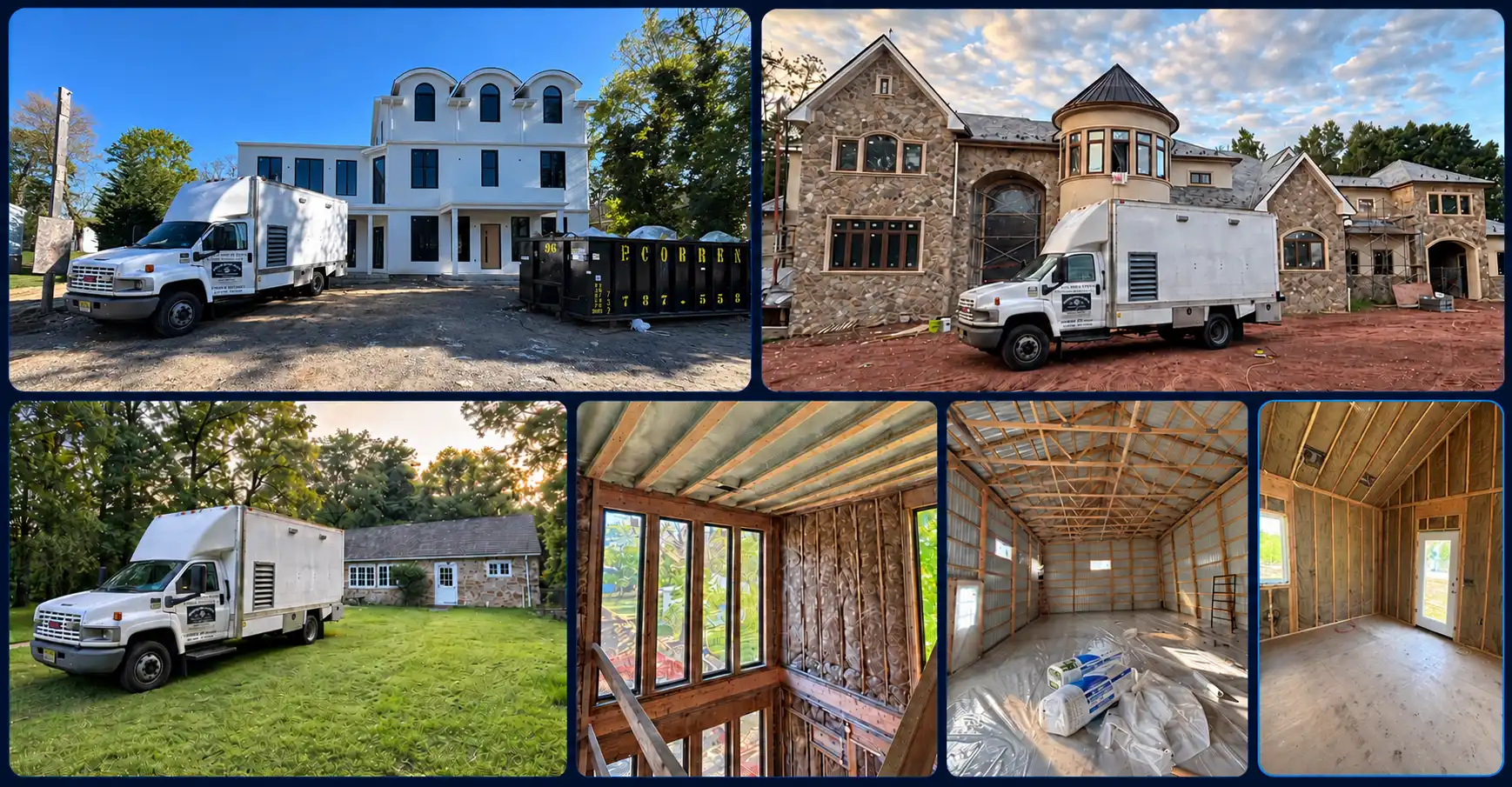

Apollo Spray Foam · West Amwell Township, New Jersey
Apollo Spray Foam works with West Amwell homeowners, builders and property managers on insulation projects for existing buildings, additions and new construction. From an attic with uneven coverage to a crawl space that needs careful planning, we review the building and your goals before proposing an insulation approach.
West Amwell includes homes, active farms and other properties with different construction styles. An insulation plan should respond to the particular building rather than assume that every attic, wall or outbuilding needs the same product. The areas you can reach, the existing insulation, the location of the thermal boundary and any moisture concerns all affect the scope.
Spray foam can expand into suitable spaces and help limit uncontrolled air movement. Open-cell and closed-cell products have different properties, and either may be appropriate in certain assemblies. We discuss application areas, preparation and project requirements before work begins. If another insulation method better fits a space, we can review that option as part of the conversation.
Our services cover several types of buildings and assemblies. Use these cards to explore each option, then tell us which spaces you want to address. A site review or project details help determine the suitable material and installation scope.
Consider open-cell or closed-cell foam for suitable walls, rooflines, crawl spaces and other assemblies where insulation and air control are priorities.
Explore spray foam →Review attic access, existing coverage, ventilation and air leakage before selecting an approach for the attic floor or roofline.
Explore attic insulation →Plan for conditions beneath the building, including access, existing materials, moisture observations and the connection to occupied rooms.
Explore crawl spaces →Add loose-fill insulation in suitable accessible assemblies when the existing construction and project goals support that method.
Explore blown-in insulation →Discuss insulation for commercial buildings and workspaces, with attention to access, assembly requirements and the project schedule.
Explore commercial services →Coordinate insulation planning with builders while assemblies are open, before walls and ceilings are closed.
Explore new construction →Properties in West Amwell can present different access and construction conditions. An older home, a new addition and a workspace on a rural property may each need a different insulation plan. Tell us whether you want to improve an existing assembly or coordinate an installation during construction. Photos, drawings and a description of the spaces can help us prepare for the discussion.
Send the West Amwell property address, building type, areas of concern and any available photos or plans.
We consider access, existing insulation, ventilation, moisture observations and how the space will be used.
We explain the proposed insulation areas, preparation needs and scheduling before providing an estimate.
These answers explain common project questions. The suitable approach depends on the building and the condition of each assembly.
It may be suitable when the target area is accessible and the assembly supports the application. We first review existing insulation, the space available, ventilation and any moisture concerns before recommending a method.
Yes. Builders and owners can discuss the insulation plan while assemblies are open. Early coordination helps clarify application areas, preparation and the installation schedule.
They have different densities and characteristics. Closed-cell foam generally provides a higher insulation value per inch, while open-cell foam is lighter and more flexible. The right choice depends on the assembly and project requirements.
Tell us how the building is used and which areas need insulation. Suitability depends on the structure, access, ventilation, moisture conditions and applicable project requirements. We will discuss the proposed scope before installation.
Use our contact page or call (609) 598-5437. Include the property address, building type, target areas and any photos or plans so our team can review the next step.