
Spray Foam Insulation
Discuss open-cell and closed-cell foam for suitable walls, rooflines and other assemblies where insulation and air control matter.
Explore spray foam →
Trusted insulation solutions for homes and businesses across New Jersey and Pennsylvania.
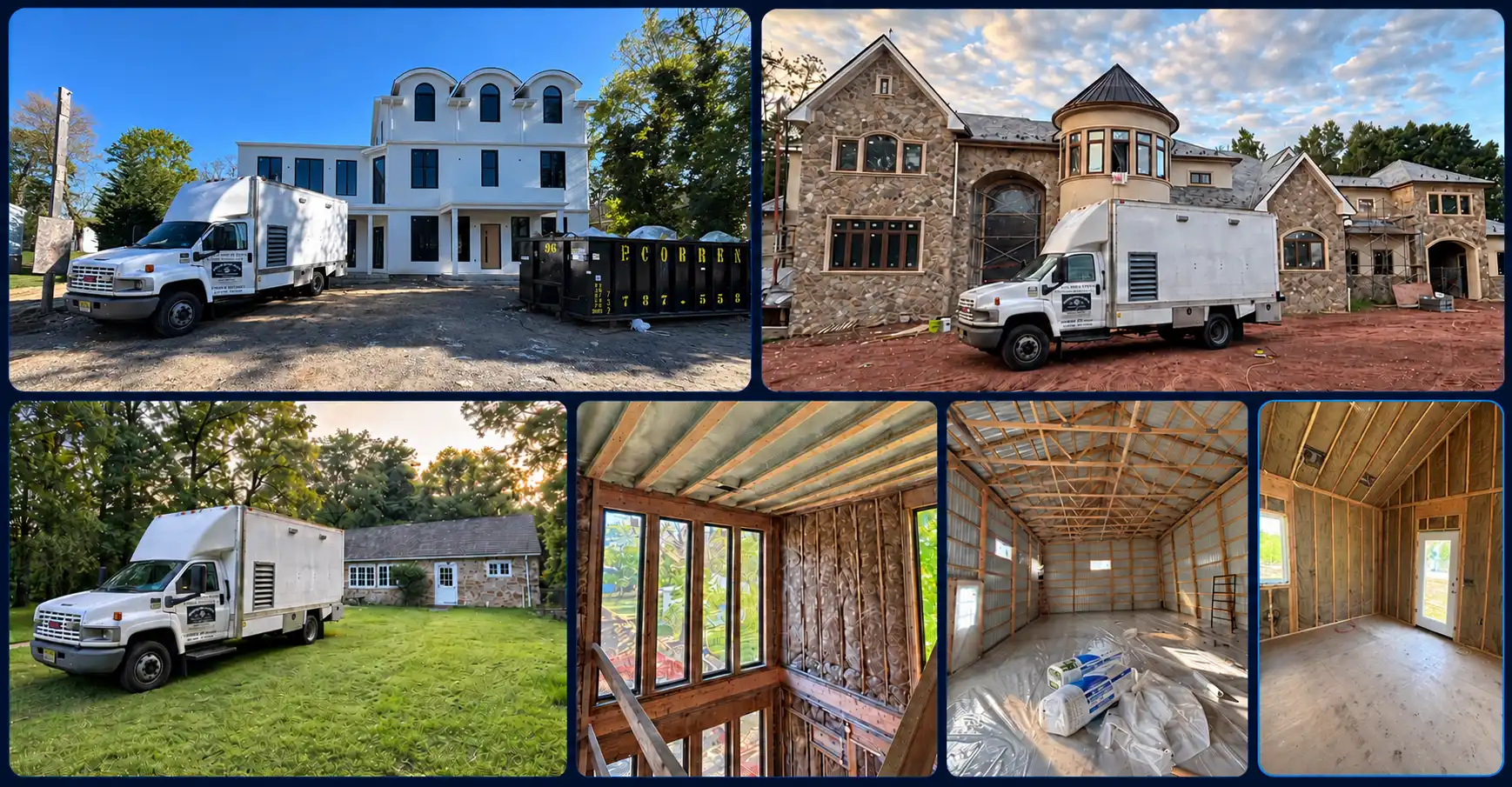

Apollo Spray Foam · Princeton, Mercer County
Apollo Spray Foam helps Princeton homeowners, builders and business owners plan insulation for existing buildings, renovations, additions and new construction. Princeton has historic properties, varied residential neighborhoods and active commercial areas. We review the construction and your project goals before discussing a suitable insulation approach.
A historic house near the center of Princeton, a neighborhood renovation and a newly framed addition can have very different insulation needs. Existing materials, cavity depth, access and ventilation all affect the plan. We first consider the intended thermal boundary, visible moisture conditions, air pathways and how the space will be used. The goal is to match the method to the actual assembly.
Spray foam expands into suitable cavities and may help limit uncontrolled air movement. Open-cell and closed-cell products differ in density and insulation value per inch. Choosing a product depends on available depth and project requirements. We explain where installation may make sense, what preparation is needed and how the work fits your schedule. For some accessible attics or other areas, blown-in insulation may be another option to discuss.
Explore the six services below, then tell us which parts of your property need attention. An attic, crawl space, wall cavity, roofline or open construction project may call for a different approach. Our recommendations follow the building conditions and the scope of your Princeton project.
Discuss open-cell and closed-cell foam for suitable walls, rooflines and other assemblies where insulation and air control matter.
Explore spray foam →Review existing coverage, access, air pathways and ventilation before planning work at the attic floor or roofline.
Explore attic insulation →Consider access beneath the building, existing materials and visible moisture conditions when planning crawl space work.
Explore crawl spaces →Explore loose-fill coverage for suitable accessible areas when the construction and project goals support it.
Explore blown-in insulation →Discuss insulation for shops, offices and other commercial spaces with attention to access and work schedules.
Explore commercial services →Review plans with your builder and coordinate installation while relevant framing remains open.
Explore new construction →Princeton is one municipality, formed when its former borough and township consolidated in 2013. Provide the full property address so we can identify the project location. Tell us whether the work involves an occupied home, a renovation, an addition, a commercial space or new construction. Photos of the attic, crawl space or exposed framing can help us understand access and current conditions.
If a renovation is underway, tell us which areas are open and when finishes are planned. Builders can share drawings and a construction timeline so insulation can be coordinated with other work. For an existing building, describe any drafts, uneven temperatures or visible moisture you have observed. Business owners near Nassau Street, Palmer Square or elsewhere in Princeton can share access and scheduling needs. These details help us discuss suitable materials and prepare a useful scope.
Send the Princeton street address, building type, target areas and any useful photos or plans.
We consider access, existing insulation, ventilation, air pathways and visible moisture concerns.
We explain suitable materials, preparation and scheduling before preparing an estimate.
These answers provide general guidance. The right method depends on your building and project requirements.
No. The former Princeton Borough and Princeton Township became one municipality in 2013. This page covers projects within the current municipality of Princeton, New Jersey.
It may be suitable in some assemblies. Existing materials, access, ventilation and moisture behavior should be reviewed before selecting a method for an attic, wall, roofline or crawl space.
Yes. Share the property address, areas involved, access limitations and preferred work schedule so we can review the scope of the commercial project.
Open-cell foam is lighter and more flexible. Closed-cell foam is denser and generally provides a higher insulation value per inch. The choice depends on the assembly and project requirements.
Use our contact page or call (609) 598-5437. Include your street address, building type, target areas, timeline and any helpful photos or construction plans.